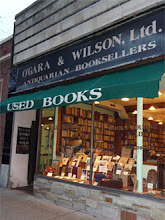
Wednesday, March 12, 2008

Brain Judo

It is in the best interest of booksellers to promote the great benefits of books. Some of these are so obvious they hardly need mentioning: books tend to have information printed inside of them; they make excellent gifts; heavier ugly ones can serve in a pinch as doorstops or projectile weapons, and so on. But being the creatures of letters that we are, most scientific evidence has been, until recently, well outside our bailiwick. Fortunately, the Internet has put rigorously researched medical knowledge into the hands of those unqualified to judge its veracity, but well-qualified to wield it to their own ends. One such tidbit recently appeared on Yahoo Health, in a short article entitled “Pick Up a Book, Bulk Up Your Brain.” It claimed that reading books doesn’t simply increase one’s knowledge. Indeed, the article extols passion for the printed page as a “self defense class for your brain.” Scientists have always known that avid readers outperform their indolent counterparts on cognitive tests. But what they recently discovered is that people who read regularly have “extra brainpower to keep the mind rolling when brain cells are under attack.” This is known as a cognitive reserve; extra brain cells are set aside to be called upon when their employer is exposed to pollution and toxins. In a study of factory workers exposed to toxic substances like lead, big readers routinely showed no loss of cognitive function, while others tended to drool on the survey questions and occasionally attempted to eat the paper.

So kudos to the advances of authors, chapels of printers, and pies of typesetters who have contributed to the mental health of people everywhere. Advances? Chapels? Pies? What the heck is going on here? Has the author of this blog been exposed to too much lead and too few books? Hardly, my friends. These extraordinary collective nouns are the genuine article. They come from this week’s Affordable but Interesting item, An Exaltation of Larks, complied and written by noted playwright and actor James Lipton. Filled with engravings and over 1,000 venereal terms (yes, you read it right, that’s the actual word for collective nouns), this fine volume is guaranteed to provide hours of entertainment, ridiculously cool trivia, and a strengthened brain cell per word. Of course, we would never make such a scientific guarantee were it not backed by a discord of experts. Seriously – see page 182 of aforementioned book. And if you are worried about your finances because a foreclosure of bankers (pg. 250) has informed you that your account is running dry, fear not. It will run you a mere $7.50.


Perhaps some of you are skeptical. Perhaps you think Yahoo Health news is an unreliable source. Perhaps you suspect that the complex of psychoanalysts (pg. 172) responsible for this study is interested only in sensationalism. I don’t blame you. Doctrines of doctors (pg. 80) will claim that only the hard sciences can provide us with the objective basis necessary for assessing the veracity of otherwise sketchy studies, conducted by unreliable broods of researchers (pg. 182), whose results are as reliable as the interest groups that fund them. Therefore: this week’s Collectible item. Published in 1918, this beautifully bound French Manuel de Neurologie is chock full of the information you need to evaluate the information you want to believe. And for those who don’t speak French, there are lots of pictures of weird looking things, which appear to be the very cells that books are purported to strengthen. Dr. C. Winkler’s fact-filled phenomenon is a mere $75 – a low price to pay for certainty about one’s brain.


But all this science is making me feel a little woozy. What need is there to objectify the value of books? Why the insistence upon facts and figures, the constant justifications in terms of brainpower improved or information gained? According to the author of this week’s Favorite, Books and Men, it is because modern progress has made naïve belief and superstition into vices. Children “have ceased to read fairy stories, because they no longer believe in fairies; they find Hans Andersen silly, and the Arabian Nights stupid; and the very babies, ‘skeptics in long-coats,’ scorn you openly if you venture to hint at Santa Claus.” This is a disaster, says Agnes Repplier, in her beautiful and affordable ($12.50) 1896 treatise on the relationship between humans and the written word. Such books, she writes, free of facts but full of fancy, are “legitimate food for a child’s mind, nourish its imagination, inspire a healthy awe, and are death to that precocious pedantry which is the least pleasing trait that children are wont to manifest.” A displeasing trait in adults, as well, I might add. Agnes might have been aghast to hear us justify books according to brain cells created rather than worlds imagined. But we booksellers need to sell books, and so both approaches must be used.


Well, there you have it. Fact or fiction? Either one will most likely be good for you and your squiggly gray friend upstairs.

Wednesday, March 5, 2008

Synchronicity

Just to get this out of the way: Lydia. Please do not refer to me as Mr. Alan. Mr. Alan is how my 1st and 3rd grade Chinese students referred to me, before asking if my goatee was real and then puking watermelon all over the floor. Incidentally, there were no teacher's assistants to help me correct their misappropriation of my name, or the floor's misappropriation of the watermelon. China, while a charming country, has its drawbacks.

On to the actual blog.

Okay. It’s very simple – weird coincidences happen at used bookstores. There’s simply no way around it. About a week ago I received a book recommendation from a German friend of a friend. She told me to look for a copy of “Max und Moritz” by Wilhelm Busch. This happened to be the only week when I was not responsible for putting out new arrivals on Saturday, so I had no idea what might be around the shop. Needless to say, when I came into the store on Monday there was a vintage, German, hand-colored copy of “Max und Moritz” sitting in the new arrivals section. I had been looking online that morning for the book, to no avail. The few copies on abebooks were far too expensive. And the price of our copy, you ask? $15. Yep, hand-colored 100 year old coincidences starting at $15.

The current owner of O’Gara and Wilson, Doug Wilson, has assured me he partakes fairly often of this invigorating synchronicity. Three times in thirty years he has encountered customers who came in to the store and began describing a particularly scarce book, only to realize he was holding precisely that book in his hand when they started speaking.

What does this mean? Well, I’m not exactly sure. But the people who frequent used bookstores know exactly what I’m talking about. They thrive on the energy that has infused used books – four leaf clovers that flutter out from old editions, inscriptions that yield unusual provenance when you check them out on Google, marginal notes that eerily echo your own opinion as you read. These books are alive, in a strange way, and looking for human companions.

Speaking of “alive in a strange way and looking for human companions,” this week’s Collector’s Item is about a gentleman who meets that description to a T. If you can’t afford the tens of thousands it costs for a first edition, this pristine first trade edition of Dracula is well worth your $75. Copies routinely go for more on ebay, and in far worse condition. Ours looks like it just came off the press (though it’s actually about a hundred years old). And there are irresistably cute bats on the spine…

But I’ve gotten away from the synchronicity theme. How to get back. Let’s see… give me an hour or two to wander around the store, looking for some coincidences.

Just back from wandering around the store for an hour and a half, and nothing. Absolutely nothing. Because that’s the thing with synchronicity. You just can’t go looking for it, and I should know that after years of trying to and failing. However. As I was looking through the children’s section I found the following book, which I had never seen before, and will definitely be our Favorite for the week. Published by Let’s Save the Children, Inc. in 1972 (nothing here is a joke), it is a rhyming, twenty page biography of Marvin Gaye with full page pictures, apparently meant for children. The poetic bio includes such gems as “For Marvin is a special man / He has a lot to say. / He’s not just a writer who writes / Of everyday sights / Nor a singer who sings / Of everyday things.” No copies available online, and this one a mere $20! Fantastic collector’s item and a very, very basic description of Marvin Gaye. Very basic. Not for serious research purposes. Perhaps this will be exactly what someone was looking for, and in that case synchronicity, as it always does, will come through the back door.


So just now a customer came in looking for a very scarce play by an obscure playwright. Guess what? I walked right over to our drama section, and couldn’t find it. But we have a large collection of scarce drama in our back storeroom, and Mr. Wilson was kind enough to check and see if it was there. And you know what… it wasn’t. But while I was looking for it, I found this week’s Affordable but Interesting item. If you are like me, then you think Johnny Depp is freaking awesome, in a Platonic way of course. If you are female and like me, you probably just think he’s freaking awesome. Either way, “Sweeney Todd: The Demon Barber of Fleet Street” is coming out on video quite soon, and we have a beautiful copy of the play, complete with dust jacket and dramatic black and white photos of the 1979 production. Expensive? No, this out of print book club edition is an astonishing $7.50, complete with the macabre dust jacket.


Well, here we are at the end of the blog on synchronicity, and nothing crazy happened. In fact, everything went totally normally. But in the process of looking for coincidences, I came across books I didn’t know existed. Very cool books. And that’s the upside of a used bookstore – you can never really lose once you walk in, provided you look hard enough.

Wednesday, February 27, 2008

I couldn't find a Latin word for "map"!

Next week, gentle readers, I will not be with you. I am going to the Continent for some time, so the next two blog entries will be written (no doubt with great humor) by the dependable Mr. Alan. In the meantime, I have been trying to get in some last-minute visits to Chicago's Festival of Maps, a really amazing citywide celebration of, well, maps. All of you should run -- not walk -- to the closest station on the Festival, for it is soon to close!

I mention this because it is from the Festival that I derived this week's Favorite:


One amazing map exhibit is at Hyde Park's own Oriental Institute: European Cartographers and the Ottoman World, 1500–1750 (click here for information). (I thought the exhibit was supposed to close on March 2, but the museum had a sign that said March 16, and the website reports it as both March 2 and March 16.) On display were, of course, many maps, as well as some truly fascinating observations about the development of mapmaking, and what historical maps indicate about the geographical and political consciousness of various eras. Also on display was a copy of Lady Mary Wortley Montagu's letters from Turkey -- relevant as historical travel writing. The exhibit plaque quoted Lady Montagu (1689-1762) speaking so sarcastically of previous travel writers that I was intrigued. Who doesn't love sarcasm?

When I returned to the store, I couldn't help looking through this 1892 biography. Apparently Lady Montagu was quite a woman; two sentences found on the Internet demonstrate this admirably:

Constantinople was full of wonders which Lady Mary, unlike so many European wives, set out to explore and understand. She mastered the language, investigated mosques, and visited with the women of the harem, whom she came to admire.

And as this book notes, she wasn't only known as the "first Englishwoman to send back accounts of the mysterious and magnificent East", but "as the friend and then the enemy of Pope; as the courageous introducer of inoculation; as the strong-minded, independent, eccentric traveller. Alike to friends and enemies, she has ever stood out as a strong, original figure." I can't believe I've never heard of her before! And I can't tell you how tempted I am by this beautiful biography -- it's only $15.00. But I feel that I should seize the chance to tell you all about Lady Montagu, and since I'd like it if more people learned about her, I think I'll repress my acquisitive feelings and let a customer have this biography.

Also in a travel-relevant vein is this Affordable and Interesting tome:


The dust jacket tells us that,

The Royal Tour is a facsimile of an altogether unique, handwritten and illustrated account of the cruise of HMS Ophir in 1901, when the Duke and Duchess of York (later King George V and Queen Mary) toured almost the whole of the British Empire .... The whole trip took nearly nine months and was enormously popular with the countries visited. It was a time when the British Empire was immensely strong .... Harry Price wrote and illustrated his journal during the voyage itself, and produced a picture of the tour which has an immediate and spontaneous impact, far removed from the turgid official reports of the time.

To prove that this description is no exaggeration, I hereby present you with pictures of the facsimile's pages.


.


The whole book is like that! It's a steal at $12.50. Who doesn't love royalty?

I was attracted mainly by the cover of this week's Collector's Item:


"Hot Stuph"! Goodness! And a picture of a yellowjacket! What could be going on in this 1909 book? My interest only increased when Doug idly opened it to the front page and read aloud:

To the Misguided, Imbecile, Impotent and Senile Democratic Party and its Surviving Unfortunate Members -- Those Men who should Know Better and Act Better; Those Men who Have Opposed with Might and Main the Institutions Made Sacred by the Republican Party, this Volume is Respectfully and Reverently Dedicated, in the Sublime Hope that it may Cause Them to Live Anew; to Shed Their Slimy Skins; ... and that Finally, For their Soul's Salvation, they May Quit the Party of Intolerance and Bigotry and Get in the Procession of Intelligence and Progress ....

... et cetera. It seems that this is a compilation of editorial comments from the early years of the "Yellow Jacket", a North Carolina newspaper that began in 1895 and ran through the early 1950s. Clearly, the editor was a Republican of no little sarcasm (say it with me now: Who doesn't love sarcasm?), and the book is a great period piece -- demonstrating not only politics of the day, but popular Southern ideas and prejudices. Maybe I'll buy it (at $75.00) as a gift ... except that I'm not sure whether I would give it to a Democrat or a Republican friend. Which would be more entertained, I wonder?

Off I go to the Continent! I can't wait to see what Alan comes up with in my absence ... I'll doubtless check on the store blog from all the way across the pond. Don't forget the map festival, everyone, and I'm sure I'll talk all about European books when I return in two weeks.

Thursday, February 21, 2008

Used bookstores put people in touch with their history!

An exciting thing happened today! Remember the First Edition I showcased just last entry -- Black Man in the White House: A Revealing Diary of the Eisenhower Administration by the first Negro Presidential Aide in History, by E. Frederic Morrow?

Well, today Mr. Morrow's goddaughter came into the shop and bought said First Edition!


Carole Landrum was out for a jog, and was quite tickled to spot Black Man in the White House in our window. She tells me that her godfather invited her parents to Eisenhower's Inaugural Ball. She also mentioned that she now regrets having disposed of her parents' books -- there was a copy of this very book among them, of course. But now she has her very own First Edition once again!

(I hope I'm getting all the details right! Ms. Landrum, please feel free to call or email and correct me if I've got anything wrong!)

Thanks to Ms. Landrum for being a good sport about taking her photo, and for telling me the story of why she was interested in this book!

Wednesday, February 20, 2008

Merry Black History Month to all, and to all a good night.

February is Black History Month, gentle readers! I learned today that this tradition started as long ago as 1926, though back then it was only Black History Week. It was expanded to a full month in 1976. (The U.S. Census Bureau has an amazingly helpful and interesting page (click here) that sums up the basic history of February as Black History Month, then provides a long list of statistics about Black education, families, income, jobs, and so on.)

One of the most Affordable and Interesting things around the shop these days are these stacks of "Ebony" magazine:


"Ebony" magazine debuted its first issue in 1946, and was soon followed by a sister magazine, "Jet". The publisher, John H. Johnson, said in an article profiling its history that

"Ebony" was founded to project all dimensions of the Black personality in a world saturated with stereotypes. We wanted to give Blacks a new sense of somebodiness, a new sense of self-respect. We wanted to tell them who they were and what they could do.

The project succeeded admirably, becoming a staple of magazine shelves everywhere. There was even a two-hour Thanksgiving TV special to celebrate "Ebony"'s 50th year.

Here, we have copies of "Ebony" from the 1960s, '70s and '80s. That's a real historical spread, and having so many issues to play with means you can find some great combinations:


At $7.50 apiece, it's even affordable to buy more than one issue -- which you'll certainly want to do once you see the stack in all its glory!

For the Collectors out there who already have every issue of "Ebony" and "Jet", we have a unique "Jet"-related item that witnesses one amazing intersection in Black history:


P.H. Polk was a Black photographer in the early 20th century; you can see some of his images on this site (click here). One of his most famous pictures was of Eleanor Roosevelt sitting in a plane that was being piloted by a Black Tuskegee Airman. That image was held up as a standard when the armed forces were struggling with the slings and arrows of integration.

This book is not only a beautiful compilation of P.H. Polk's work; it's a signed Limited Edition (number 621 of 1200). Ah, but not only is it a signed Limited Edition -- we've included two scarce P.H. Polk pamphlets, one of which is itself signed. But there's more! The book and pamphlet are inscribed from P.H. Polk to Bob Johnson, "a very fine person to know":


Bob Johnson was executive editor of "Jet", and this book was a treasured part of his estate. You can own it all -- pamphlets, signatures, the lot! -- for $600.00.

Our regular Jon showed me this week's Favorite, pleased by its recent political relevance:


Black Man in the White House: A Revealing Diary of the Eisenhower Administration by the first Negro Presidential Aide in History was written by E. Frederic Morrow, who served as Administrative Officer for Special Projects between 1955-1961. At a time when Chicago's own Senator Obama is making a historic bid at American leadership, this 1963 First Edition serves as a reminder of how far we've come. In the words of the dust jacket, Morrow was "the sole Negro on a White House staff whose civil-rights policy was paralyzed by overcaution, ineptitude, and indecision". It's really amazing to think about such a time ....

Mr. Obama keeps a house in Hyde Park; I wonder how he would feel, if he happened to walk past the store and saw this book in the window at $12.50? I know he's away campaigning, but I like to think about it anyway.

Well, happy Black History Month! Stay warm -- it's colder than ever. And ... hey, if you happen to see Senator Barack Obama, point him our way!

Wednesday, February 13, 2008

Nothing says "I love you" like a book! And also a pillow fight.

Tomorrow is Valentine's Day, gentle readers, and while I will bow to this fact with one item presented here, I shall not devote the whole entry to the holiday. This is to prove that we here at O'Gara and Wilson are classier than other retail outlets, which swoop down upon Valentine's Day with glee and every effort to sell ten million things. * We love our readers and regulars for who they are; they don't need to buy things from us. Not that we mind if you do, of course! (Also, I forgot about Valentine's Day until I'd already picked three items for this week's blog entry, and decided to portray my absent-mindedness as a virtue.)

A sweet rose-wreath topped by a crown decorates the front of this week's Favorite:


This 1924 gem is devoted to Royal Lovers and Mistresses: The Romance of Crowned and Uncrowned Kings and Queens of Europe. There's a Valentine gift for you! (Apparently the author, Mr. Angelo S. Rappoport, has also brought the world such classics as The Curse of the Romanoffs.) You and your sweetheart can swoon together over romantic tales of chance meetings in chateaus and palace parlors, and portraits of the various protagonists:


You can also discuss the ensnaring tactics used by long-ago royal favorites (perhaps comparing them to the tactics you used to ensnare each other!) or debate the merits of such statements as, "Woman is more ambitious than man, despite everything that has been said to the contrary," and "Woman avails herself of love as one of the weapons nature has put at her disposal to enslave man and make him subservient to her plans." Nothing says "I love you" like the pillow fights that might result from reading this book together. At $25.00, it's on par with a bunch of roses and chocolate -- and much more creative!

And after you injure each other in the pillow tussle, you can learn how to set bones with this Affordable and Interesting little thing:


Interestingly, this book appears to have been written by a Michael Powell. I doubt that this is the same Michael Powell all used booksellers think of when they hear that name, who started the excellent bookstore right across the street from us and went on to win honor and glory with his mall-sized Portland location. But I thought it was a funny coincidence.

Detailing "101 things everyone used to know how to do", this book teaches us how to make soap, build a log cabin, track animals, and write sonnets. I somewhat doubt that "everyone" used to know how to do those things, much less tie a hangman's noose, set broken bones, carve a totem pole, make a Roman mosaic or (most usefully) embalm a corpse -- but let's not quibble. Enough people knew in ages past, and hardly anyone knows now, so with luck this book will start a movement of re-learning such useful skills! $7.50 will teach us all how to dig wells, make ice cream, understand opera or blow glass! We must have respect for our forebears, after all. I know I said that only one item this week would be relevant to Valentine's Day, but I can't help thinking that it would be so romantic to make ice cream with your sweetheart. Or embalm a corpse together. Adorable!

At least there's no way I can possibly relate this week's Collector's Item to Valentine's Day:


... unless you think the Chicago Massacre of 1812 is romantic ... or Eugene Field -- because this copy belonged to him! One doesn't normally associate the famous children's poet with such things, but he did spend the latter part of his life in Chicago. Perhaps he met Joseph Kirkland, the author of this 1893 book, here in the city: the copy is inscribed to Mr. Field from the author, who cites himself as a "friend and admirer".


Chicago of the late 1800s seems to have been quite focused on capturing and describing its city history. This makes sense to me, since the city had sprung up and expanded so rapidly. Residents probably wanted to feel as though they could compare themselves to the folk of older cities like New York and Philadelphia. The 1812 Fort Dearborn massacre gained (or, I should say, re-gained) particular attention at that time; it was in 1881 that the Chicago Historical Society first solemnly commemorated the terrible events with a plaque, and one thing Mr. Kirkland emphasizes is that his book presents "never before heard" account and facts about the battle. Of course, back in 1893 such books were rarer (and perhaps less scandal-mongering) than a modern book with such a tagline would be. This book is respected as a significant historical resource, and we're selling its First Edition for $125.00.

Well, now I leave you to your embalming I mean, ice-cream-making, gentle readers. Or, if you don't have a sweetheart, curl up with a book tomorrow! Books don't talk back, anyway, and they always have interesting things to say.

Wednesday, February 6, 2008

Qui me amat, amat et puellum meam, et amat et bovem meam.

I will open this entry abruptly and immediately with the Collector's Item, because the photo is burning a hole in the camera:

.


Carl Sandburg -- yes, that Carl Sandburg, the famous Chicago writer and American historian -- admired this wooden Indian greatly. It belonged to his friend Oliver Barrett, and we have a picture of Sandburg and Barrett posing happily in front of the Indian. In fact, Doug tells me that Sandburg had written a short story about a cigar store Indian, and likely admired this one all the more for that!

The Indian is part of the remarkable Barrett collection, which we acquired recently, and which boasts many incredible pieces of Americana: signed letters from Houdini (including a handwritten account of one of his magic tricks), books from Abraham Lincoln's library ... unfortunately, gentle readers, I cannot cite you a price on these pieces, for we are sending them to auction with the respectable Bonham's and Butterfield's.

The Indian will only grace our store for a day or two before it is shipped away, to be auctioned (along with the rest of the Barrett collection) in June. Of course, if you're interested in knowing details about the sale, please do email us or visit the store, and we'll tell you all about it. In the meantime, hurry and come over as soon as you can if you want to catch a glimpse of this historic artifact!

Now that I've gotten that out of the way, it's time for my promised cowboy tidbit ... but, my gentle readers, that cowboys are sociologically interesting is most of what I have to report. They are so idealized that it is actually difficult to locate webpages that speak of them in a down-to-earth fashion. I suppose this makes sense; I couldn't help noting what a romantic icon they are in this blog's last entry. They seem to popularly represent, in the words of this site (click here), a certain kind of American morality: "The morals of the Cowboy are steadfast. He takes on and accomplishes any job given to him, no matter how hard or dangerous this job maybe. He rides and competes for pride, not for the actual belt buckle or title. A Cowboy stands for all that is pure and true."

My "little-known cowboy fact", which I promised to open this entry with, is perhaps not all that little-known (but might justify a roadtrip): the existence of a Cowboy Museum in Oklahoma (click here)! (There's also a National Cowgirl Museum in -- where else? -- Texas.) You can probably learn more interesting things from the excellent blog that was posted as a comment on our last entry: Mustang 'n' Cowboys (click here).

Cowboys are sportsmen, too, and perhaps those who were out and about in the 1920s appreciated this week's Favorite:


Unlike everything else in the world, the Von Lengerke & Antoine catalogue -- "Just for Sport!" says the tagline -- does not appear to have a website devoted to it. In searching for references to VL&A catalogues, I have mostly found websites belonging to sportsmen-collectors; for instance, a blog called "Fishing for History: the History of Fishing and Fishing Tackle" (click here). The most detailed description of the catalogue comes from an article about Wall Street's apparently declining interest in sporting goods stores:

The crème de la crème [of sporting goods merchants] was Abercrombie & Fitch, the great New York based retailer whose Chicago store was known as Von Lengerke & Antoine, located on Wabash Avenue. Before it went bankrupt in the 1970s, only to have its name purchased and revived as a controversial marketer of teen-age clothing, Abercrombie & Fitch was the premier emporium store for discerning hunters and anglers. I can recall as a child poring over each edition of the VL&A catalog that my father received in the mail.

Is Abercrombie & Fitch so controversial? Color me surprised. But I digress. Now that I know these catalogues came from Abercrombie & Fitch, I can research the company's history to discover everything I ever wanted to know about the story of a major sporting goods store. To be honest, though, I'm more interested in looking at the catalogues themselves. We're offering a rather marked up 1927 copy for $75.00 and a much cleaner 1932 issue for $95.00, and the really exciting thing about them is the internal photos:

.


The true sportsman requires not only interesting bits for his gun, but also remarkable equipment for his drinks! (That strange little machine in the middle of the second photo is an ice crusher.)

Last but, as always, nowhere near least comes what I consider Affordable and Interesting:


Sometimes, in a used bookstore, one comes upon books that one hasn't any idea how to shelve. (My personal favorite tactic for dealing with this problem is to put the book in the window with a sign talking about how weird and interesting it is, and let the problem solve itself.) This book is one such: I encountered it in the Anthropology section, removed it for consideration, and soon decided that I simply had to give it the exposure it deserved. There must be a pyromaniac out there who would really love this book ... and honestly, who wouldn't be excited to read about 25 famous fires? Not only does this treatise cover such conflagrations as the Hindenburg, the Normandie and the Chicago Fire, but fires in theatres, circuses, prisons ... it even discusses general firefighter technique and approaches (or at least, the 1957 versions thereof). All that for $6.50! And indeed, not only do you obtain an interesting book by buying it, you also do a good deed by sparing me the angst of figuring out where to shelve it.

In this cold I'm always afraid I'll accidentally leave a space heater on, and set myself on fire -- but now that I've spent so much time with this book, I think I'll remember to be careful. Watch your electric blankets, gentle readers, and I'll see you next week.